Dinner at 6:30 After Getting Home at 6:00: How Working Parents Can Use the Hotcook Timer
How to use timer cooking, safe ingredient choices, and morning prep so dinner is ready when the family gets home.
Quick answer
For working parents, the hardest part of dinner is often the thirty minutes after everyone gets home. Children are hungry, adults are tired, and the fridge may contain ingredients but no clear plan. The Hotcook timer can help, but only if the morning setup is realistic.
Why this works in a smart cooker
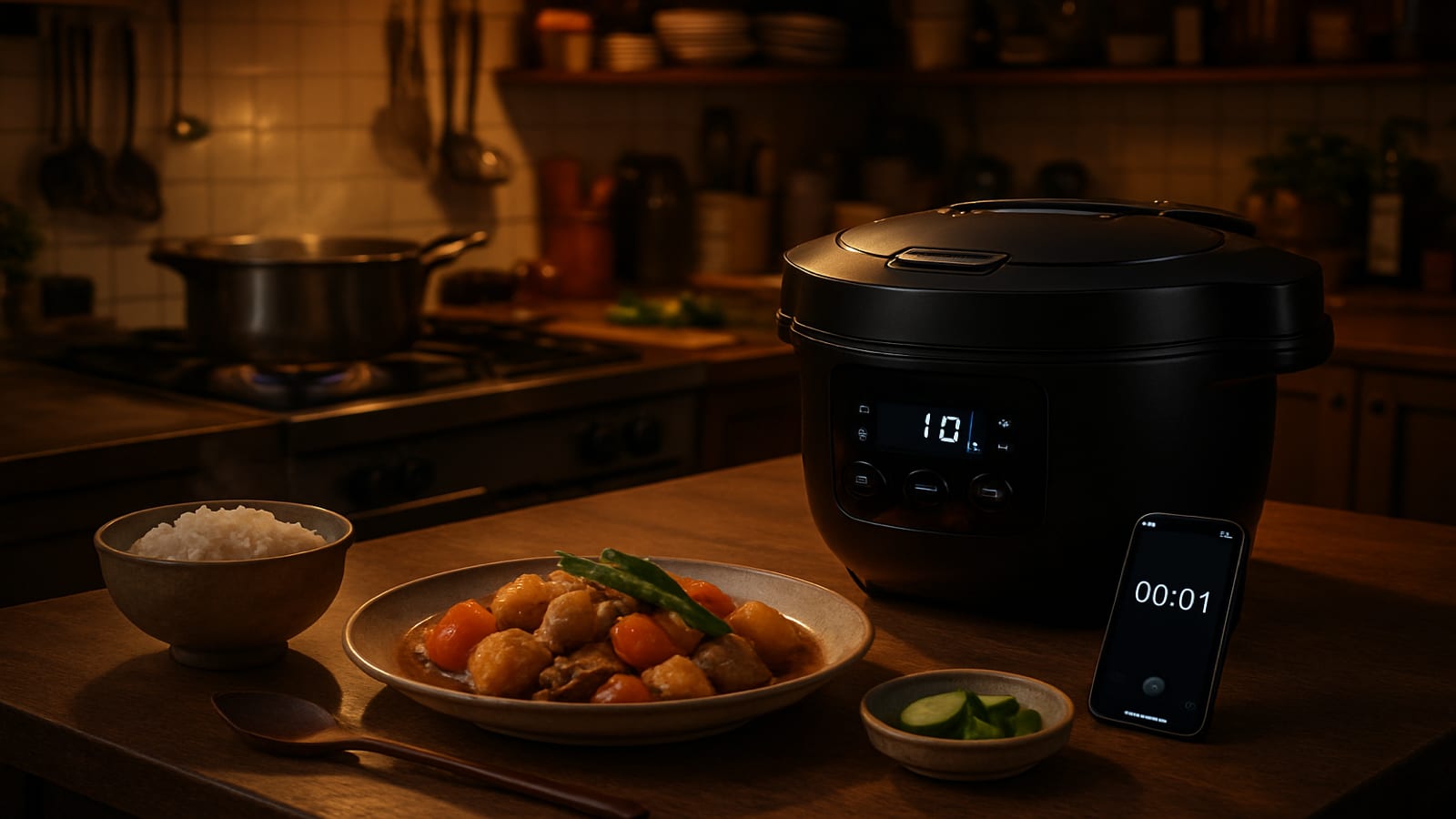
Timer cooking works best for sturdy simmered dishes: curry without delicate greens, root-vegetable stews, tomato-based chicken dishes, and bean or lentil soups. These can sit safely in the pot according to the appliance instructions and finish close to dinner time.
A Hotcook-style smart cooker is most useful when it removes the need to stand at the stove and watch the pot. That does not mean every ingredient should be treated the same way. The best results come from matching the ingredient, cut size, liquid level, and seasoning direction before pressing start.
How to decide what to cook
Choose timer meals by asking one question: will this ingredient survive waiting and reheating? Potatoes, carrots, onions, daikon, chicken thighs, canned tomatoes, beans, and curry bases are usually forgiving. Leafy greens, seafood, and delicate tofu are better added later or cooked separately.
On a weeknight, it helps to decide the shape of the meal first. If you want something light, choose soup. If you want rice to feel complete, choose a thicker simmered dish. If you want leftovers, choose seasoning that will still taste good the next day.
Useful rule
Start from the ingredient that needs to be used soonest, then choose the cooking mode around it. This prevents the common pattern of buying one more ingredient for a recipe while older food goes unused.
Practical cooking patterns
These patterns are designed for real kitchens: flexible, forgiving, and easy to adapt when one ingredient is missing.
- Choose the search intent first: whether the real problem is ingredients, time, cleanup, family schedule, or flavor direction.
- Use Family, Time saving, Meal prep as decision clues, then turn the idea into a bowl, soup, noodle dish, rice topping, or simple main.
- For dinner topics like Dinner at 6:30 After Getting Home at 6:00: How Working Parents Can Use the Hotcook Timer, prioritize what can realistically be cooked and eaten tonight over a perfect recipe match.
- Cut vegetables the night before and store them together so morning setup takes less than five minutes.
- Use frozen meat or pre-portioned protein when the appliance manual and food-safety rules allow it.
- Make the Hotcook dish the main dish, then keep side dishes extremely simple.
Common mistakes to avoid
Automatic cooking feels simple, but small choices still matter. Pay attention to liquid, timing, and texture, especially when combining vegetables and protein with different cooking speeds.
- Treating the search result as a fixed recipe instead of adapting it to the fridge.
- Adding extra work when one practical decision would make dinner good enough.
- Trying a new timer recipe on a busy weekday adds risk.
- Adding delicate greens in the morning can lead to dull color and texture by dinner.
- Planning a meal that still needs several side dishes defeats the purpose of the timer.
Decide from your actual fridge
Snapmeal can help decide whether the ingredients in your fridge are timer-friendly or better suited to a quick same-day dish. That makes the morning decision faster and reduces the chance of coming home to a meal that technically cooked but does not feel right.
This is the reason Snapmeal starts with a fridge photo rather than a blank recipe search. The question is not “What recipes exist?” but “What should I cook tonight with these ingredients, this energy level, and this cooking tool?”