Turn Leftover Vegetables into Soup: Four Hotcook Flavor Templates
How to clear the vegetable drawer with Japanese, Western, Chinese-style, and miso soup patterns in a smart cooker.
Quick answer
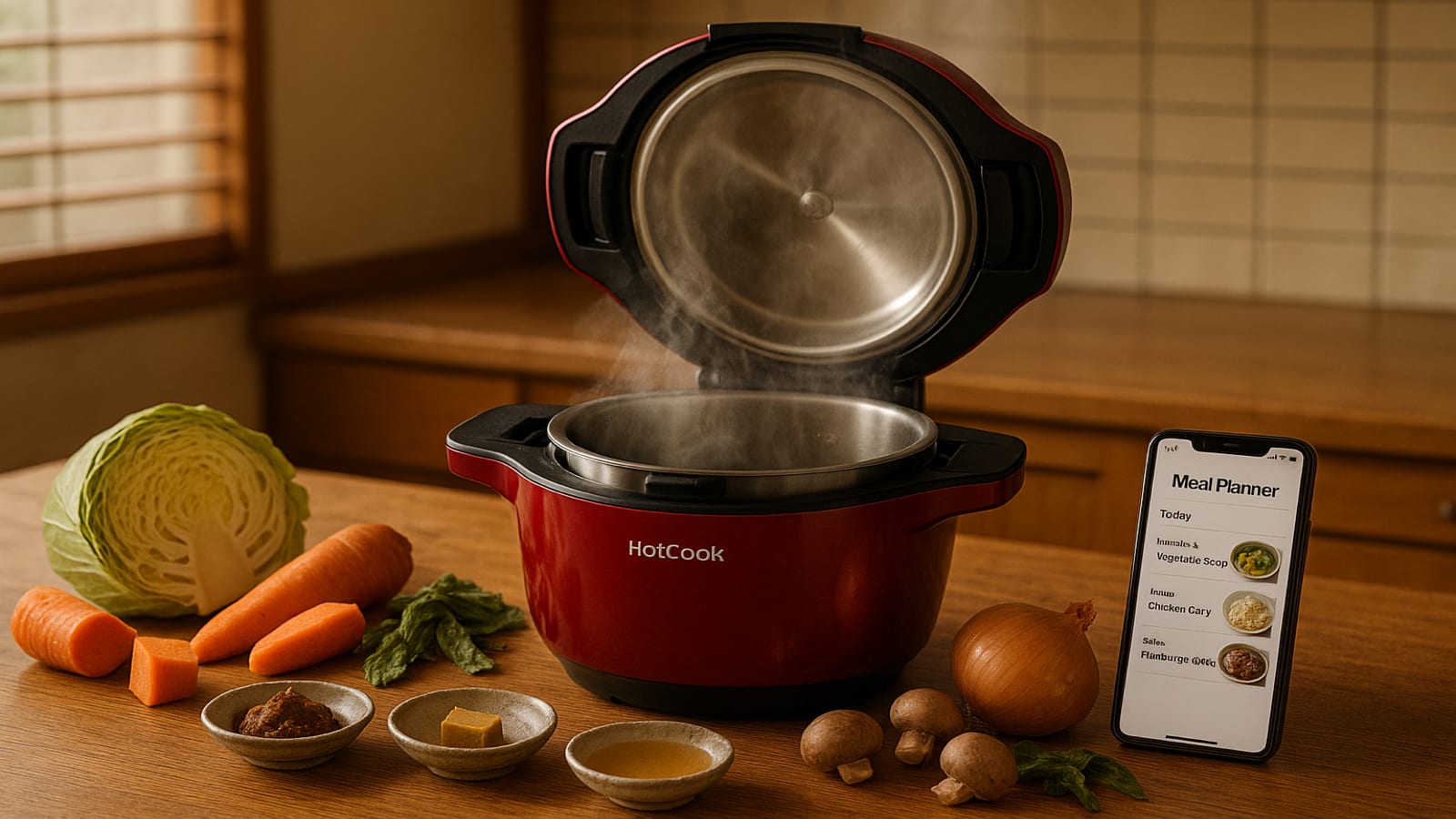
Leftover vegetables are rarely exciting on their own: a half carrot, a little cabbage, two mushrooms, a tired onion. But together, they can become exactly the kind of soup the Hotcook is good at.
Why this works in a smart cooker
The key is choosing one flavor template before adding everything. Japanese dashi, Western consommé, Chinese-style chicken stock, and miso each make a different soup even when the vegetables overlap.
A Hotcook-style smart cooker is most useful when it removes the need to stand at the stove and watch the pot. That does not mean every ingredient should be treated the same way. The best results come from matching the ingredient, cut size, liquid level, and seasoning direction before pressing start.
How to decide what to cook
Use hard vegetables first, watery vegetables for volume, and delicate greens near the end. If you have protein, add chicken, tofu, sausage, beans, or egg depending on the seasoning direction.
On a weeknight, it helps to decide the shape of the meal first. If you want something light, choose soup. If you want rice to feel complete, choose a thicker simmered dish. If you want leftovers, choose seasoning that will still taste good the next day.
Useful rule
Start from the ingredient that needs to be used soonest, then choose the cooking mode around it. This prevents the common pattern of buying one more ingredient for a recipe while older food goes unused.
Practical cooking patterns
These patterns are designed for real kitchens: flexible, forgiving, and easy to adapt when one ingredient is missing.
- Choose the search intent first: whether the real problem is ingredients, time, cleanup, family schedule, or flavor direction.
- Use Soup, Fridge use, Vegetables as decision clues, then turn the idea into a bowl, soup, noodle dish, rice topping, or simple main.
- For dinner topics like Turn Leftover Vegetables into Soup: Four Hotcook Flavor Templates, prioritize what can realistically be cooked and eaten tonight over a perfect recipe match.
- Dashi and soy sauce for daikon, mushrooms, carrot, and tofu.
- Consommé and tomato for cabbage, onion, potato, and sausage.
- Chicken stock, ginger, and sesame oil for napa cabbage, mushrooms, and egg.
Common mistakes to avoid
Automatic cooking feels simple, but small choices still matter. Pay attention to liquid, timing, and texture, especially when combining vegetables and protein with different cooking speeds.
- Treating the search result as a fixed recipe instead of adapting it to the fridge.
- Adding extra work when one practical decision would make dinner good enough.
- Mixing too many seasoning directions makes the soup muddy.
- Adding leafy greens too early can dull their color and texture.
- Using only leftover vegetables without a protein or starch may not feel like dinner.
Decide from your actual fridge
Snapmeal is especially helpful for leftover soup because the starting point is visual. A fridge photo can reveal the half-used ingredients that are easy to forget.
This is the reason Snapmeal starts with a fridge photo rather than a blank recipe search. The question is not “What recipes exist?” but “What should I cook tonight with these ingredients, this energy level, and this cooking tool?”