How to Plan Dinner from What Is Already in Your Fridge
A practical way to turn fridge ingredients into dinner when you have food, but no clear meal idea.
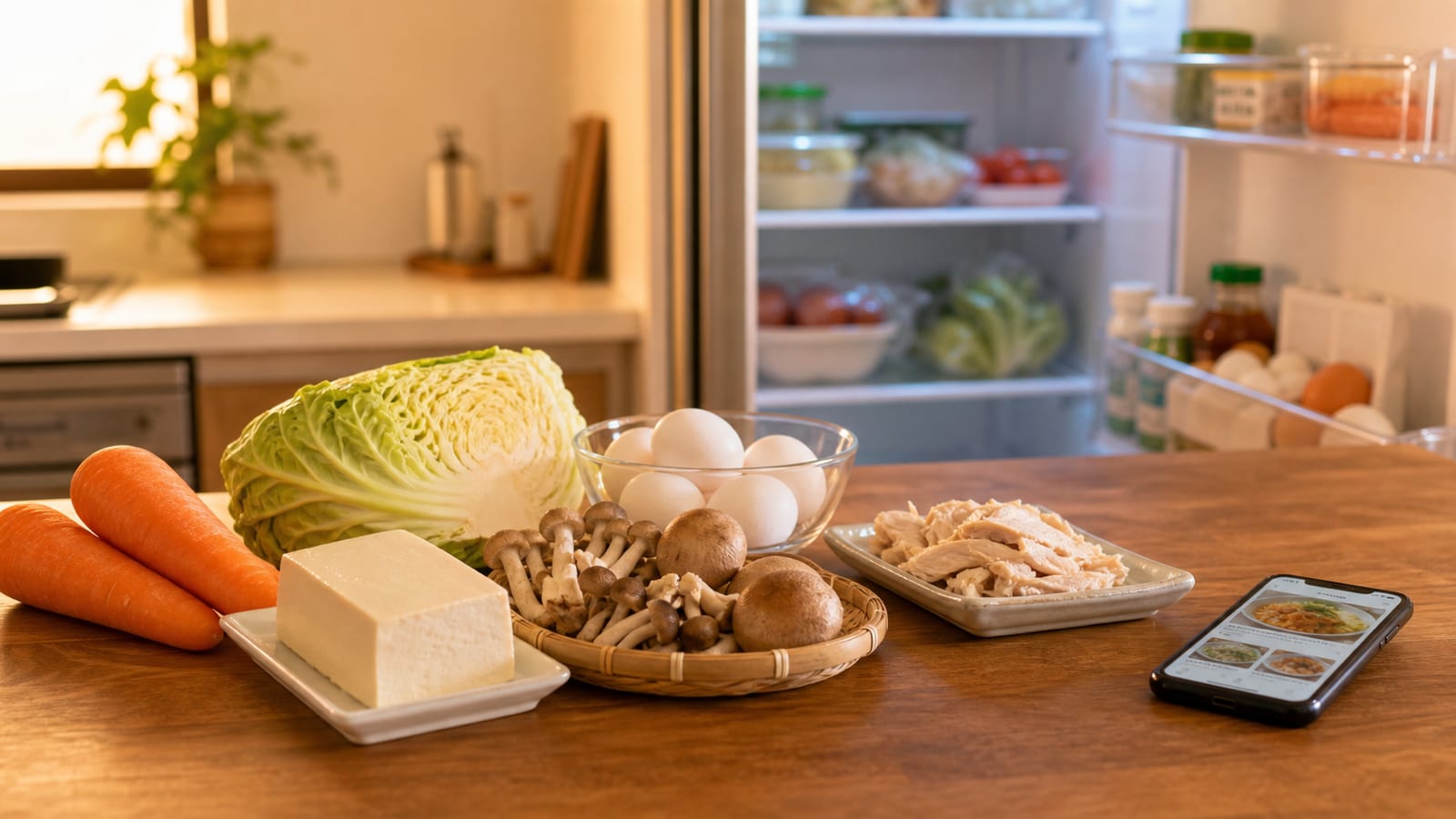
Quick answer
When the fridge is not empty but dinner still feels impossible, the problem is usually not a lack of ingredients. It is a lack of structure. Sort the food into protein, vegetables, flavor base, and use-soon items before looking for a recipe.
Why this works in a smart cooker
This approach works because it changes the question from “What recipe can I search for?” to “What meal shape fits these ingredients?” A smart cooker, frying pan, microwave, or soup pot can all work once the role of each ingredient is clear.
A Hotcook-style smart cooker is most useful when it removes the need to stand at the stove and watch the pot. That does not mean every ingredient should be treated the same way. The best results come from matching the ingredient, cut size, liquid level, and seasoning direction before pressing start.
How to decide what to cook
Start with the ingredient that can become the main protein, then decide whether tonight should be a one-pan main, a large soup, a rice bowl, noodles, or a simple simmered dish.
On a weeknight, it helps to decide the shape of the meal first. If you want something light, choose soup. If you want rice to feel complete, choose a thicker simmered dish. If you want leftovers, choose seasoning that will still taste good the next day.
Useful rule
Start from the ingredient that needs to be used soonest, then choose the cooking mode around it. This prevents the common pattern of buying one more ingredient for a recipe while older food goes unused.
Practical cooking patterns
These patterns are designed for real kitchens: flexible, forgiving, and easy to adapt when one ingredient is missing.
- Choose the search intent first: whether the real problem is ingredients, time, cleanup, family schedule, or flavor direction.
- Use Meal planning, Fridge ingredients, Weeknight dinner, Time saving as decision clues, then turn the idea into a bowl, soup, noodle dish, rice topping, or simple main.
- For meal planning topics like How to Plan Dinner from What Is Already in Your Fridge, prioritize what can realistically be cooked and eaten tonight over a perfect recipe match.
- Chicken, cabbage, and mushrooms become a soy-ginger simmer or tomato stew.
- Tofu, eggs, and leftover vegetables become a larger miso soup or rice bowl.
- Small amounts of several vegetables become soup, fried rice, or a side dish instead of separate recipes.
Common mistakes to avoid
Automatic cooking feels simple, but small choices still matter. Pay attention to liquid, timing, and texture, especially when combining vegetables and protein with different cooking speeds.
- Treating the search result as a fixed recipe instead of adapting it to the fridge.
- Adding extra work when one practical decision would make dinner good enough.
- Searching one ingredient at a time can ignore the rest of the fridge.
- Trying to make a perfect multi-dish meal creates friction on tired weeknights.
- Buying one more ingredient for a recipe can leave older food unused.
Decide from your actual fridge
Snapmeal helps by starting from a fridge photo. You confirm the ingredients, remove anything irrelevant, and get meal ideas based on what is actually available tonight.
This is the reason Snapmeal starts with a fridge photo rather than a blank recipe search. The question is not “What recipes exist?” but “What should I cook tonight with these ingredients, this energy level, and this cooking tool?”